
All about crypto mining
In June 2020, FATF updated its guidance to include the “Travel Rule” for cryptocurrencies, a measure which mandates that VASPs obtain, hold, and exchange information about the originators and beneficiaries of virtual asset transfers https://funny2minutes.com. Subsequent standardized protocol specifications recommended using JSON for relaying data between VASPs and identity services. As of December 2020, the IVMS 101 data model has yet to be finalized and ratified by the three global standard setting bodies that created it.
Once you have chosen your platform, the next step is to fund your account so you can begin trading. Most crypto exchanges allow users to purchase crypto using fiat (i.e., government-issued) currencies such as the US Dollar, the British Pound, or the Euro using their debit or credit cards – although this varies by platform.
Cryptocurrency has taken the financial world by storm, promising a new way to transact and store value without the need for traditional banking systems. But what exactly is cryptocurrency, and why has it become such a global phenomenon?
Tokens are digital assets issued by decentralized applications based on blockchains. These are applications similar to the ones you might find on your smartphone, but instead of being operated by a single company, they run completely autonomously. Think of it like a free Uber app where taxi drivers and customers can connect together without having to pay the middleman company a cut of profits.
As a result, most crypto holders have shifted their attention to the investment potential of cryptocurrencies, which has since birthed the speculative side of the crypto market. Investors seem to be more concerned about the possibility that the price of a cryptocurrency may rise sometime in the future than whether they can use cryptocurrencies to purchase goods and services, and so crypto is now predominantly viewed as an investment.
All i need to know about crypto trading
Unlike regular money from banks, cryptocurrencies aren’t controlled by any one big company or government. Instead, cryptocurrencies are like public digital record books that anyone around the world can see and keep a copy of.
Cryptocurrency is digital money that doesn’t require a bank or financial institution to verify transactions and can be used for purchases or as an investment. Transactions are then verified and recorded on a blockchain, an unchangeable ledger that tracks and records assets and trades.
If you own $10,000 worth of Bitcoin and want to hedge against a possible decrease in its price, you could buy a put option for a premium of $500 that gives you the right to sell bitcoin at $50,000 at a future date. If Bitcoin’s price falls to $40,000, you can exercise your option and sell your bitcoin for $50,000, significantly reducing your losses.
Unlike regular money from banks, cryptocurrencies aren’t controlled by any one big company or government. Instead, cryptocurrencies are like public digital record books that anyone around the world can see and keep a copy of.
Cryptocurrency is digital money that doesn’t require a bank or financial institution to verify transactions and can be used for purchases or as an investment. Transactions are then verified and recorded on a blockchain, an unchangeable ledger that tracks and records assets and trades.
All about crypto
In proof-of-work (PoW) networks, crypto ‘miners’ from around the world race to solve a mathematical equation. This math problem helps to secure a blockchain network. The miner that solves this math problem first is able to validate and verify all the transactions within the latest block. They are rewarded in the ‘fees’ that users attach to their orders to have their transaction validated (it is not free!), and a network reward.
It’s important to remember that Bitcoin is different from cryptocurrency in general. While Bitcoin is the first and most valuable cryptocurrency, the market is large — there are thousands of cryptocurrencies. And while some cryptocurrencies have total market valuations in the hundreds of billions of dollars, others are obscure and essentially worthless.
The IMF is seeking a coordinated, consistent and comprehensive approach to supervising cryptocurrencies. Tobias Adrian, the IMF’s financial counsellor and head of its monetary and capital markets department said in a January 2022 interview that “Agreeing global regulations is never quick. But if we start now, we can achieve the goal of maintaining financial stability while also enjoying the benefits which the underlying technological innovations bring,”
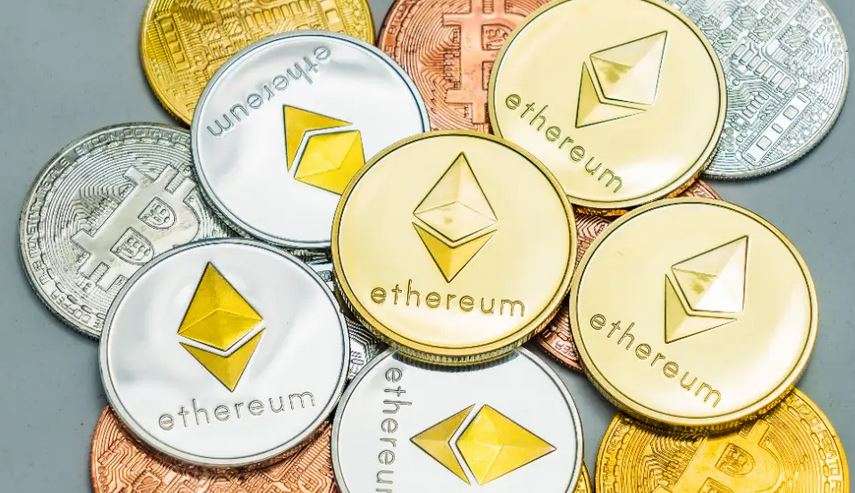
In proof-of-work (PoW) networks, crypto ‘miners’ from around the world race to solve a mathematical equation. This math problem helps to secure a blockchain network. The miner that solves this math problem first is able to validate and verify all the transactions within the latest block. They are rewarded in the ‘fees’ that users attach to their orders to have their transaction validated (it is not free!), and a network reward.
It’s important to remember that Bitcoin is different from cryptocurrency in general. While Bitcoin is the first and most valuable cryptocurrency, the market is large — there are thousands of cryptocurrencies. And while some cryptocurrencies have total market valuations in the hundreds of billions of dollars, others are obscure and essentially worthless.
The IMF is seeking a coordinated, consistent and comprehensive approach to supervising cryptocurrencies. Tobias Adrian, the IMF’s financial counsellor and head of its monetary and capital markets department said in a January 2022 interview that “Agreeing global regulations is never quick. But if we start now, we can achieve the goal of maintaining financial stability while also enjoying the benefits which the underlying technological innovations bring,”