
All about crypto coins
In contrast, a PoS blockchain normally allows validators to validate blocks in a manner proportional to their stake in the system. This structure is designed to disincentivize attacks on the system as the participants with the power to do so stand to lose the most casoola bonus.
CIP-31, aka “reference inputs” will introduce a new kind of input that would allow developers to look at the result of an output without having to spend it. This would optimize transaction throughput and increase concurrency.
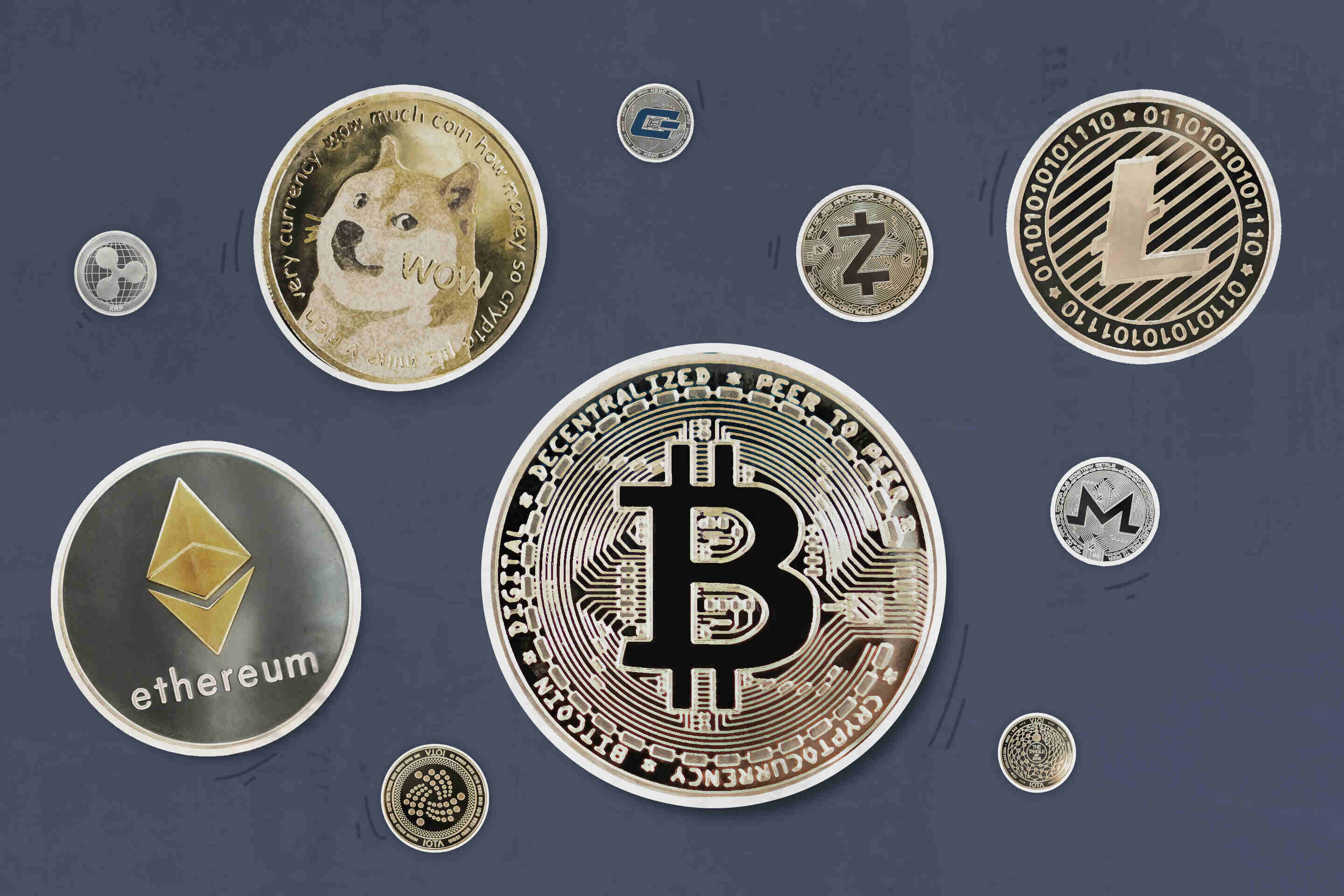
Litecoin (LTC) was launched in 2011 by Charles Lee. Like Bitcoin, Litecoin employs the proof-of-work consensus mechanism. Though Litecoin is both faster and cheaper than Bitcoin, it has not been as widely adopted as Bitcoin and therefore has less value.
BlockNews.com is your premier source for real-time cryptocurrency, blockchain, and financial market news. Our mission is to deliver accurate, timely, and insightful information to help both seasoned investors and newcomers navigate the evolving digital economy. With in-depth analysis, exclusive insights, and up-to-date news, BlockNews.com keeps you informed on the latest trends in crypto, DeFi, NFTs, tech, and beyond. Stay ahead of the herd with BlockNews.com
All about crypto currency
Not all cryptocurrency comes from mining. For example, crypto that you can’t spend isn’t mined. Instead, developers create the new currency through a hard fork. A hard fork creates a new chain in the blockchain. One fork follows the new path, and the other follows the old. Crypto you can’t mine is typically used for investments rather than purchases.
Bitcoin had a price of $7,167.52 on Dec. 31, 2019, and a year later, it had appreciated more than 300% to $28,984.98. It continued to surge in the first half of 2021, trading at a record high of $69,000 in November 2021. It then fell over the next few months to hover around $40,000 and rose with increasing speed in 2024 to more than $100,000.
If you don’t want to mine Bitcoin, you can buy it using a cryptocurrency exchange. Most people will be unable to purchase an entire BTC because of its price, but you can buy portions of one BTC on these exchanges in fiat currency, such as U.S. dollars.
Bitcoin rewards are halved every 210,000 blocks. For example, the block reward was 50 new bitcoins in 2009. On May 11, 2020, the third halving occurred, bringing the reward for each block down to 6.25 bitcoins. The fourth halving occurred in April 2024 and lowered the reward to 3.125 bitcoins. The next halving should happen in mid-2028 and reduce the reward to 1.5625 BTC.
Though the process of generating Bitcoin is complex, investing in it is more straightforward. Investors and speculators can buy and sell Bitcoin on crypto exchanges. As with any investment, particularly one as new and volatile as Bitcoin, investors should carefully consider if Bitcoin is the right investment for them.
All about crypto currencies
Nvidia has asked retailers to do what they can when it comes to selling GPUs to gamers instead of miners. Boris Böhles, PR manager for Nvidia in the German region, said: “Gamers come first for Nvidia.”
If you don’t have the resources to compete with the heavy hitters, one option is joining a mining pool, where users share rewards. This reduces the size of the reward you’d get for a successful block, but increases the chance that you could at least get some return on your investment.
What is cryptocurrency? Cryptocurrency is a digital or virtual form of money that uses cryptography for security. Unlike traditional currencies, it operates on decentralized networks based on blockchain technology. This means no central authority, like a bank, controls it. Bitcoin, the first and most well-known cryptocurrency, was created in 2009 by an unknown person or group using the name Satoshi Nakamoto. Since then, thousands of cryptocurrencies have emerged, each with unique features and uses. People use cryptocurrencies for various purposes, including online purchases, investments, and even as a means to transfer money across borders quickly and cheaply.
Some miners pool resources, sharing their processing power over a network to split the reward equally, according to the amount of work they contributed to the probability of finding a block. A “share” is awarded to members of the mining pool who present a valid partial proof-of-work.
Nvidia has asked retailers to do what they can when it comes to selling GPUs to gamers instead of miners. Boris Böhles, PR manager for Nvidia in the German region, said: “Gamers come first for Nvidia.”
If you don’t have the resources to compete with the heavy hitters, one option is joining a mining pool, where users share rewards. This reduces the size of the reward you’d get for a successful block, but increases the chance that you could at least get some return on your investment.
Learn all about crypto
We strive to present all the information & pricing as accurately as possible, but we cannot ensure that the data is always up to date. Additional terms may apply to free offers. Disclosure: To ensure our site’s review data always stays free & running up to date, sometimes we might receive a small commission if the reader purchases through our site links, at zero additional cost.
Fundamental analysis equips yourself with the tools to assess a cryptocurrency project’s underlying value. This strategic approach enables you to navigate the complex cryptocurrency landscape with a long-term perspective, making trading decisions that align with a project’s viability and potential.
Another strategy you can follow is the 1% rule, where you don’t risk any amount more than 1% of your total capital on a single position. For instance, if you have $10,000 to invest and want to adhere to the 1% rule, you could buy $10,000 of Bitcoin and set a stop-loss order to sell at $9,900. This way, you would limit your losses to 1% of your total investment capital.
So, if you want to invest and not to gamble, resist the urge to buy things you don’t understand, even if everyone is telling you to buy it because “it could make you rich quicker”. In other words, don’t let fear of missing out (FOMO) creep up on you.
Fast forward to today, and Bitcoin alone is worth over $2 trillion, making up nearly half the crypto market cap. This isn’t just another passing trend; it’s a seismic shift in how we perceive money, value, and trust in financial systems.